In 2025, Artificial Intelligence (AI) is no longer a futuristic concept reserved for large enterprises. It has become a practical, affordable, and powerful tool for small and medium-sized businesses (SMEs) in India. With rapid digital adoption, government initiatives like Digital India, and increasing competition across industries, AI offers Indian SMEs a clear path to efficiency, scalability, and sustainable growth.
From automating routine operations and improving customer experience to enhancing marketing strategies and enabling data-driven decision-making, AI is transforming how businesses operate. This guide explains how Indian SMEs can leverage AI in 2025, practical use cases, benefits, implementation strategies, and how AI can future-proof businesses in an increasingly digital economy.
Why AI Is Critical for Indian SMEs in 2025
Indian SMEs form the backbone of the economy, contributing significantly to employment and GDP. However, they face challenges such as limited budgets, resource constraints, rising customer expectations, and intense competition. AI helps overcome these challenges by:
Reducing operational costs through automation
Improving productivity with intelligent workflows
Enhancing customer engagement and personalization
Enabling faster, data-driven decisions
Competing with larger enterprises using smart technology
With cloud-based AI tools and affordable SaaS solutions, AI adoption is now within reach for startups, MSMEs, and growing enterprises across India.
Key Areas Where Indian SMEs Can Use AI
1. AI-Powered Business Automation
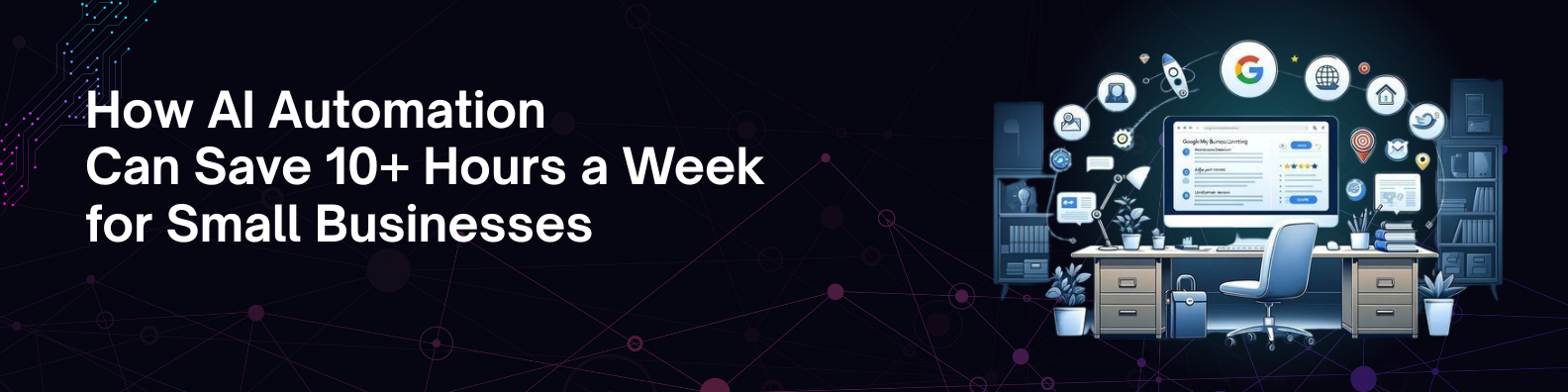
Automation is one of the most impactful uses of AI for SMEs. AI tools can automate repetitive and time-consuming tasks, allowing teams to focus on strategic activities.
Examples include:
Invoice processing and billing automation
Payroll and accounting automation
Inventory management and demand forecasting
Automated data entry and document processing
AI-driven automation improves accuracy, reduces human error, and significantly cuts operational costs.
2. AI in Customer Support and Experience
Customer expectations in 2025 demand instant, personalized, and 24/7 support. AI-powered chatbots and virtual assistants help SMEs deliver consistent customer service without increasing manpower.
Benefits include:
24/7 customer support through AI chatbots
Faster query resolution
Multilingual support for Indian customers
Personalized responses based on customer history
AI improves customer satisfaction, retention, and brand trust.
3. AI for Digital Marketing and Sales Growth
Marketing is one of the strongest areas where AI delivers measurable ROI for SMEs. AI tools help businesses reach the right audience, at the right time, with the right message.
AI-powered marketing use cases:
Predictive customer targeting
AI-generated content and ad copy
Personalized email and WhatsApp campaigns
AI-driven SEO optimization and keyword research
Marketing performance analytics
With AI, small businesses can compete with larger brands by running smarter, data-backed campaigns.
4. AI in Web and Mobile App Development
AI is reshaping web and mobile app development by improving speed, accuracy, and user experience. Indian SMEs investing in digital platforms can benefit from AI-driven development.
Applications include:
AI-assisted UI/UX design
Automated testing and bug detection
Personalized app experiences
AI-driven recommendation engines
This allows SMEs to build scalable, intelligent digital products without massive development costs.
5. AI for Data Analytics and Decision-Making
Data is one of the most valuable assets for businesses. AI-powered analytics tools help SMEs turn raw data into actionable insights.
Key benefits:
Sales and revenue forecasting
Customer behavior analysis
Market trend predictions
Risk assessment and fraud detection
AI-driven insights enable business owners to make faster and more confident decisions.
6. AI in HR and Talent Management
Hiring and managing talent can be time-consuming for SMEs. AI simplifies HR processes and improves workforce efficiency.
AI applications in HR:
Resume screening and candidate matching
Employee performance analysis
AI-powered training and upskilling
Workforce planning and retention strategies
This helps businesses build skilled teams aligned with future growth goals.
How Indian SMEs Can Start Implementing AI
Step 1: Identify Business Pain Points
Start by identifying areas where time, cost, or efficiency issues exist. AI should solve real business problems, not be adopted just for trends.
Step 2: Choose the Right AI Tools
Select AI tools that align with your business goals, budget, and technical capabilities. Many cloud-based platforms offer scalable pricing for SMEs.
Step 3: Start Small and Scale Gradually
Begin with one or two AI use cases, measure performance, and expand adoption over time.
Step 4: Partner with an AI Development Company
Working with an experienced AI development partner ensures smooth implementation, customization, and long-term scalability.
Government Support and AI Adoption in India
The Indian government actively promotes AI adoption through initiatives like Digital India, Startup India, and MSME digital transformation programs. These initiatives provide funding, training, and infrastructure support to encourage AI-driven growth among SMEs.
Challenges of AI Adoption and How to Overcome Them
While AI offers immense benefits, SMEs may face challenges such as:
Lack of technical expertise
Data privacy concerns
Initial investment costs
Integration with existing systems
These challenges can be addressed by choosing reliable vendors, focusing on data security, and adopting AI incrementally.
Future of AI for Indian SMEs Beyond 2025
As AI technologies continue to evolve, SMEs will gain access to even more advanced tools such as generative AI, autonomous workflows, and predictive intelligence. Businesses that adopt AI early will gain a long-term competitive advantage.
Conclusion
In 2025, AI is not optional for Indian SMEs—it is essential for growth, efficiency, and competitiveness. By leveraging AI across operations, marketing, customer experience, and decision-making, small and medium businesses can unlock new opportunities and scale sustainably.
Adopting AI today prepares Indian SMEs for a smarter, more agile, and technology-driven future.